Prestigious grant awarded to national immunodermatology consortium
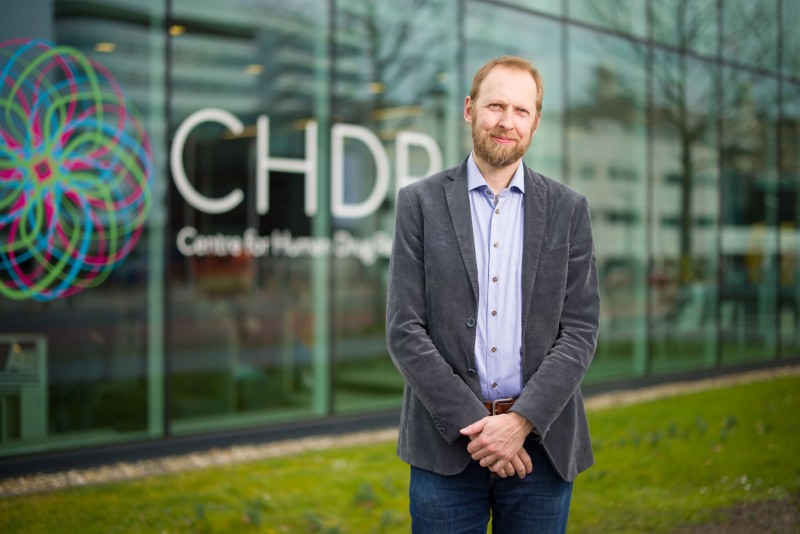
The Next Generation ImmunoDermatology (NGID) consortium, a network of researchers, clinicians and industry partners in the field of (immuno)dermatology, has been awarded over €10 million from the Dutch Research Council. Established on the initiative of Prof. Robert Rissmann, CHDR’s Research Director in Dermatology, the consortium will focus on ‘deep phenotyping’ and personalised therapy development in six skin diseases.
‘I am very happy and humbled by the success of this application — first of all for all the patients whose quality of life is affected tremendously by skin diseases, and also for our own research which aims to address this unmet clinical need,’ says Rissmann. ‘Dermatology research in the Netherlands has never before received a grant of this size. It’s a huge boost for the under-researched field of inflammatory skin diseases, both in the Netherlands and abroad. And thanks to the involvement of pharmaceutical and tech companies, who will invest an additional €1.5 million, we should see more impetus for translational studies.’
[text continues below the photo]
For the first time, all Dermatology departments at Dutch university medical centres (UMCs) are brought together within one consortium. Together with consortium partners, the UMCs will build a unique infrastructure to facilitate research, involving nationwide standardisation of outcome measures and methodology. Rissmann: ‘This consortium is a really exciting development for CHDR Dermatology too. We already have very fruitful collaborations with the UMCs of Leiden and Rotterdam, and now we’ll have the opportunity to collaborate with more dermatologists in a wider range of UMCs, each with their own specific areas of expertise and highly specialised patient care.’
Deep phenotyping
For Rissmann, the award means recognition for the efforts of the many partners who have aligned and engaged with one another to make this consortium possible. The award also represents further endorsement for the approach Rissmann calls ‘deep phenotyping’: using a range of different measurement methods to develop objective biomarkers to map disease progression and recovery accurately at very high resolution. As part of the consortium, deep phenotyping will be carried out in six key diseases: cutaneous T-cell lymphoma, atopic dermatitis, plaque psoriasis, urticaria, hidradenitis suppurativa, and cutaneous lupus erythematosus.
Focus on inflammation
The grant comes at a time of innovation, as a variety of new treatments are being developed for inflammatory skin diseases. The NGID, too, has a strong emphasis on inflammation. Of the six diseases under investigation by the consortium, five are inflammatory skin diseases. Rissmann: ‘In recent years, our Dermatology group has developed challenge models for studying inflammatory skin diseases, in collaboration with Dr Matthijs Moerland’s Immunology group. With the DermaToolbox and our suction blister technique, we’re able to objectively evaluate skin characteristics and examine inflammatory cytokines and various immune cells following the application of a challenge.
‘Inflammatory skin diseases can also serve as a useful model to study treatments for other inflammatory disorders: on the skin, most compounds can be administered locally and the effects are easy to see and measure,’ says Rissmann. ‘In the coming years, I expect to see several breakthroughs in the treatment of inflammatory diseases in the skin and elsewhere in the body. With the NGID consortium in place, we are ready to play our part in driving those developments.’
Interested in learning more?
More articles from 2022 stories